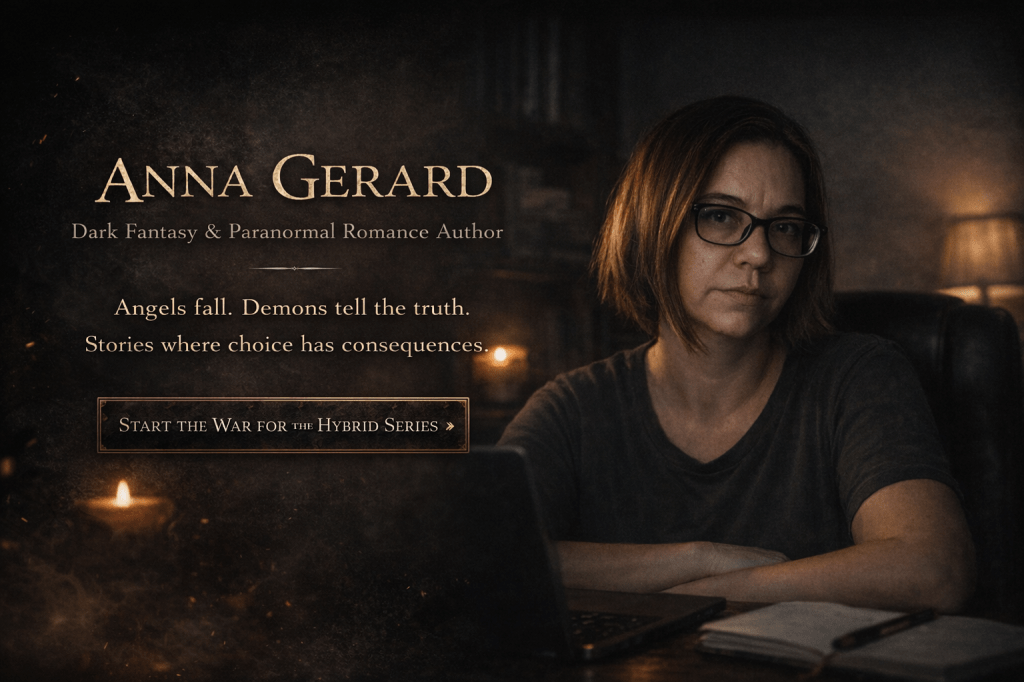


Sometimes you choose a story.
And sometimes… it feels like the story chose you.
You pick it up without thinking too much about it.
Maybe it caught your attention for a reason you can’t fully explain.
A title. A line. A feeling.
And then you start reading.
At first, it’s just a story.
But slowly, something shifts.
A character says something that feels too familiar.
A moment hits a little deeper than you expected.
A struggle on the page mirrors something you’ve been carrying quietly in your own life.
And suddenly it’s not just entertainment anymore.
It’s connection.
Those are the stories that stay.
The ones that arrive at the right time.
The ones that put words to things you hadn’t fully understood yet.
The ones that sit with you long after you’ve closed the book.
Not because they were perfect—
But because they were personal.
I’ve always believed that stories have a way of meeting us where we are.
They don’t solve everything.
They don’t erase what’s difficult.
But they remind us that we’re not the only ones who have ever felt this way.
That someone, somewhere, understood it well enough to write it down.
And maybe that’s why we return to stories again and again.
Not just to escape.
But to recognize pieces of ourselves we didn’t know how to name.
🖤
— Anna Gerard
Timing Changes What We Hear
The same book can meet us differently at different points in our lives. A line we barely noticed years ago may suddenly feel written directly for us after loss, change, love, or a decision we never expected to face.
The words did not change. We did.
That is why returning to an old favorite can be surprising. We remember the plot, but discover that our sympathy has shifted. A character we once admired now frustrates us. Someone we overlooked becomes the person we understand most.
Recognition Is Not the Same as an Answer
A story cannot make a painful choice for us or remove the reality waiting outside the book. What it can offer is recognition.
It can show that fear and hope sometimes exist together. That grief is not a failure to move on. That wanting something complicated does not make us the only person who has ever carried that contradiction.
Sometimes being understood is not a solution. It is simply enough light to help us take the next step. That is also why readers need hope in dark fantasy, even when the world around it stays dangerous.